
CELEBRITY
👑 ANDREW CONTROVERSY RETURNS: Fresh Police Scrutiny Surrounding Former Prince Andrew Raises Difficult Questions About Royal Accountability, Palace Reputation and Whether the Monarchy Can Finally Move Forward!

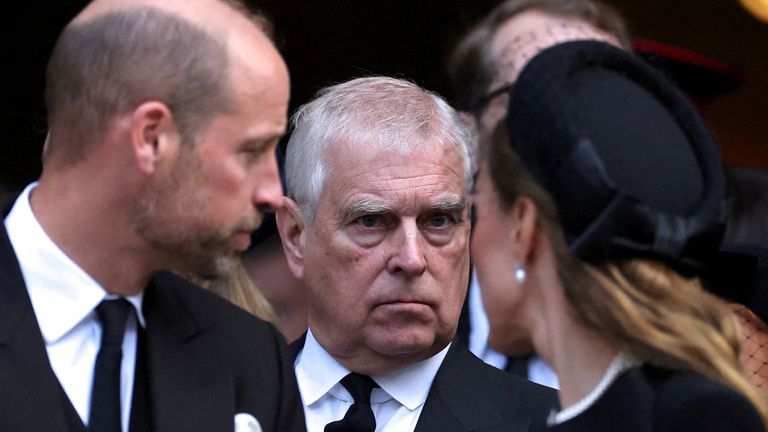
The British Royal Family is facing renewed scrutiny as former Prince Andrew once again finds himself at the centre of a growing controversy involving police investigations, his past association with convicted sex offender Jeffrey Epstein and uncomfortable questions about accountability within the monarchy.
The latest developments have brought fresh attention to Andrew Mountbatten-Windsor, whose longstanding controversies have continued to create difficulties for the institution even after King Charles took steps to distance the monarchy from his brother.
POLICE INVESTIGATION BRINGS FRESH PRESSURE
In a significant development on October 30, 2026, Police Scotland confirmed that it was conducting preliminary inquiries into Andrew’s reported time at Balmoral alongside Epstein and his associate Ghislaine Maxwell.
Authorities described the inquiries as being at a very early stage, stressing that their work would be evidence-led and focused on the needs of survivors.
The development followed Andrew’s February arrest by Thames Valley Police on suspicion of misconduct in public office, relating to allegations that sensitive information may have been shared with Epstein during his time as Britain’s trade envoy.
Andrew denies wrongdoing.
The investigation has attracted considerable attention because of the questions surrounding his former public responsibilities and his association with Epstein.
LEGAL BATTLE ADDS ANOTHER DIMENSION
Andrew’s legal challenges have also complicated the situation.
In October, a court confirmed that search warrants used by police to search properties associated with him had been unlawful. However, the ruling did not bring the wider investigation to an end.
Thames Valley Police maintained that its investigation remained ongoing and that legal proceedings would determine how material obtained during the searches could be handled.
The distinction is important: a ruling concerning search warrants does not establish whether the allegations under investigation are true or false.
KING CHARLES AND THE PALACE FACE DIFFICULT QUESTIONS
For King Charles, the continuing controversy presents another reputational challenge.
The monarch has previously taken steps to separate Andrew from the privileges and public standing associated with senior royal membership.
Andrew lost his remaining royal titles and honours and was required to leave Royal Lodge.
Nevertheless, the latest developments raise questions about how the institution should respond when a member of the Royal Family becomes involved in serious legal controversy.
The Palace has previously indicated that it would support law enforcement authorities where appropriate.
For royal observers, the issue extends beyond Andrew himself. It concerns public confidence, institutional transparency and whether the monarchy can demonstrate that accountability applies regardless of family connections.
CAN THE MONARCHY FINALLY MOVE FORWARD?
The controversy also places the Royal Family’s future reputation under renewed examination.
Prince William and other senior royals have spent considerable time representing a modern monarchy focused on public service, stability and responsibility.
However, Andrew’s continuing legal difficulties risk keeping uncomfortable questions about the institution in the headlines.
There are also important distinctions between the actions of an individual and the responsibilities of the wider Royal Family. Andrew’s situation should not automatically be treated as evidence of wrongdoing by other members of the monarchy.
Ultimately, the direction of the investigation will depend on evidence, legal procedures and decisions made by the relevant authorities.
For now, the Andrew controversy remains an uncomfortable chapter for the British monarchy.
The central question is no longer simply how the Palace can manage another damaging headline. It is how the institution can maintain public confidence while allowing independent legal processes to establish the facts.
And as police inquiries continue, the pressure for transparency and accountability is unlikely to disappear anytime soon.

Taylor Swift, Blake Lively, Donna Kelce, and Andrea Swift Arrive in Mecedes Benz Stadium on Taylor’s Private Jet to Support Travis Kelce at the Chiefs vs. Falcons Game, but Fans Notice a Visible Mark on Taylor’s Stomach That Fuels What They Have Been Suspecting All Along… See Clearer Photos and a Never-Before-Seen Clip of Their Beautiful Arrival….

I used to ask myself what Beyoncé saw in Jay-Z that made her stay loyal, even after he cheated on her multiple times, until I read his documentary and I realized Beyonce is so lucky to be his wife.

DAKOTA JOHNSON turns heads in a SIZZLING sheer outfit as she and MACHINE GUN KELLY prove they’re still going strong on a date night amid steamy new ROMANCE

🚨❤️ JUST IN: Taylor Swift FINALLY Breaks Her Silence on Pregnancy Rumors After Husband Travis Kelce Is Caught Getting Extra Affectionate in Recent Photos — Fans Think She’s Hiding a Baby Bump, but Travis’s Unexpected Reaction Has Everyone Talking! 😳🤰

DONALD TRUMP’S WHITE HOUSE BRIEFING TAKES AN UNEXPECTED TURN! President Boasts About His Achievements and Claims to Be Among America’s Greatest Presidents, Before a SHOCKING PHOTO DISPLAY Triggers Questions

⚡ PALACE FAMILY CRISIS: King Charles Faces Growing Pressure as Prince William and Prince Harry’s Reportedly Unresolved Feud Threatens to Overshadow the Future of the British Monarchy!

👑 ANDREW CONTROVERSY RETURNS: Fresh Police Scrutiny Surrounding Former Prince Andrew Raises Difficult Questions About Royal Accountability, Palace Reputation and Whether the Monarchy Can Finally Move Forward!

🚨 JUST IN: King Charles, 78, SPOTTED in a Shockingly Intimate Moment With a Mysterious Woman Aboard a Luxury Yacht — But It’s Her Unexpected Baby Bump That Has Everyone Staring! 😱 The Viral Sightings Have Sparked Wild Speculation, Leaving Fans Asking: WHAT IS REALLY GOING ON? 👀

🚨 JUST IN: King Charles, 78, MOBBED by Screaming Crowds During Birthday Celebrations — Moments Later, Reports of a Sudden Collapse Spark Royal Panic as Viral Footage Leaves the World Stunned! 😱👑

🚨💔 30 MINUTES AGO: BUCKINGHAM PALACE ANNOUNCES HEARTBREAKING ROYAL DEATH! Prince William Stands Beside a Tearful Kate as She Breaks Down and Says, “It Is With Our Deepest Sorrow That We Announce…”

Breaking News: Prince Harry Rushed to Hospital After Accident, King Charles Announces with Sorrow, “The Royal Family Has Suffered a Great LOss…
