
NEWS
BREAKING: America stunned by devastating news. Trump has passed away at his presidential residence in Washington..FULL STORY

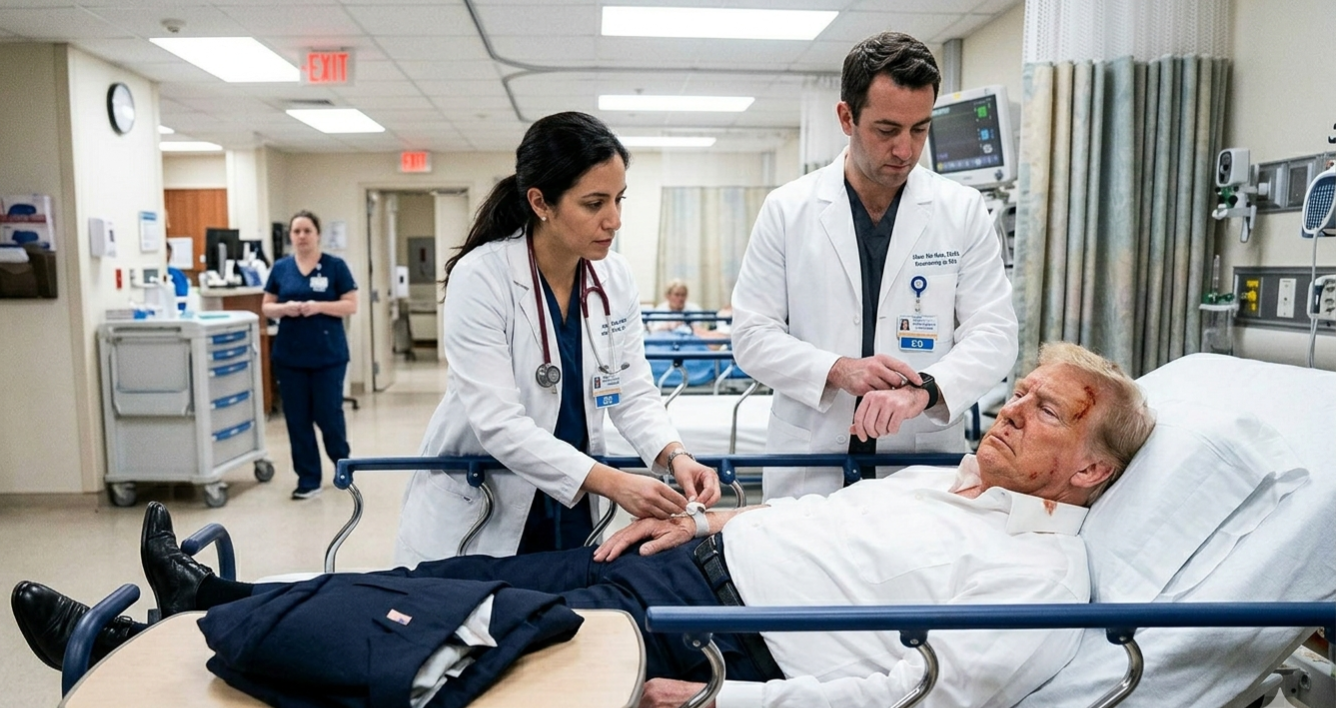
In the early hours of the morning, a wave of confusion swept across social media platforms as unverified claims began circulating online suggesting that Donald Trump had reportedly passed away at his presidential residence in Washington.
Within minutes, the allegation ignited a digital firestorm, drawing millions of reactions, reposts, and frantic speculation from users across the globe.
What made the situation more intense was not just the claim itself, but the speed at which it spread. Screenshots, short posts, and vague “breaking” updates began appearing on multiple platforms almost simultaneously, each echoing the same unsettling message.
Yet, despite the volume of posts, no official confirmation or statement was released from any verified authority, leaving the public suspended in uncertainty.
As the rumor gained momentum, timelines filled with conflicting emotions. Some users expressed shock and disbelief, while others urged caution, pointing out how quickly misinformation can spiral out of control in the digital age. The absence of credible news reports only deepened the tension, creating a vacuum where speculation began to grow unchecked.
Observers noted that high-profile figures like Trump are often targets of viral false reports, especially during politically charged or highly emotional periods. In many cases, such claims originate from obscure accounts before being amplified by engagement-driven algorithms that prioritize sensational content over accuracy. This cycle often leads to confusion before fact-checkers can intervene.
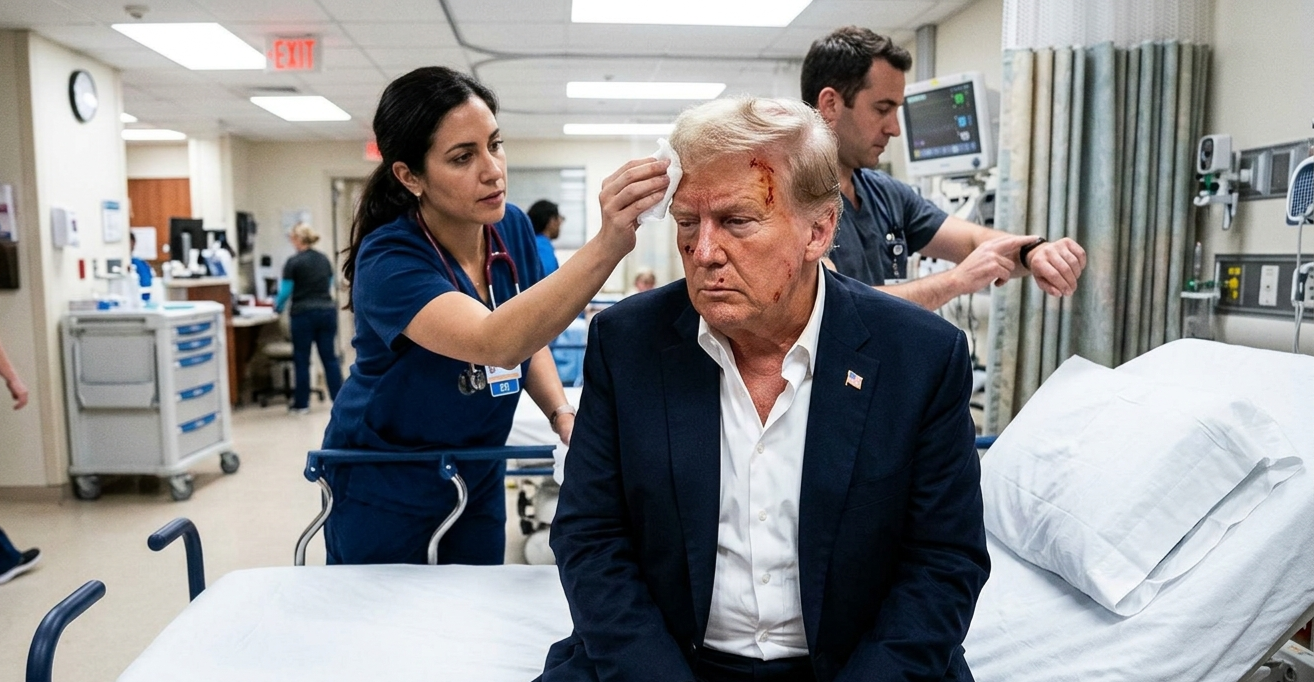
Despite the growing noise online, major news organizations remained silent on the matter, a detail that many users began to notice and question. In breaking news situations involving global political figures, verified outlets typically respond quickly, and their absence in this case became a key point of skepticism for many observers.
Meanwhile, online communities became divided. One side demanded immediate clarification from official sources, while others cautioned against spreading unverified claims. The uncertainty created a strange digital atmosphere where fear, curiosity, and doubt all coexisted in real time, each refresh of the feed bringing new, but unconfirmed, variations of the same story.
Experts in media literacy have repeatedly warned about the dangers of viral misinformation, especially when it involves public figures. They emphasize that emotionally charged headlines are designed to trigger rapid sharing before verification occurs, often leading to widespread confusion even after the original claim is debunked or clarified.
As the situation continued to unfold, no credible updates confirmed the claims circulating online. Instead, the silence from authoritative sources only highlighted the importance of patience in moments of viral uncertainty. In the absence of verified facts, speculation filled the gap, fueling even more discussion and debate across platforms.
For now, the situation remains unclear, with no official statement supporting the claims that sparked the online frenzy. What is evident, however, is how quickly a single unverified post can escalate into a global talking point within minutes, reshaping conversations and dominating timelines.
Until reliable confirmation emerges, the only certainty is uncertainty itself. And in the fast-moving world of digital information, that uncertainty can sometimes feel louder than the truth.







Taylor Swift Spotted Looking Emotional as She Watches Tyquan Thornton Try to Stand Up Before Realizing His Ankle Is Broken After a Big Play Against the Raiders – A Heartbreaking Moment as Brittany Mahomes Comforts Taylor as She Struggles to Hold Back Her Emotions

Taylor Swift Stuns as She Is Spotted at Allegiant Stadium With Brittany Mahomes, Who Shows Off Her New Arm Tattoo to Taylor, as They Support and Cheer for Their Husbands, Travis Kelce and Patrick Mahomes, During the High-Stakes Chiefs vs. Raiders Game

Taylor Swift Breaks NFL Protocol Again and Rushes to Hug Husband Travis Kelce as He Leads the Charge Onto the Field at Allegiant Stadium for Chiefs vs. Raiders Game

Taylor Swift and Husband Travis Kelce Spotted in an Adorable Moment as They Stroll Onto the Field at Allegiant Stadium for Warmups Ahead of Chiefs vs. Raiders Game

Taylor Swift Steals the Spotlight as She Shouts “My Mr. Cleveland” and Runs to Hug Husband Travis Kelce Upon His Arrival at Allegiant Stadium for Chiefs vs. Raiders Game

Taylor Swift Arrives in Las Vegas on Her Private Jet Alongside Her Parents Andrea and Scott Swift and Husband Travis Kelce’s Parents Donna and Ed Kelce to Support Travis at the High Stakes Chiefs vs. Raiders Game

Taylor Swift, Brittany Mahomes and Dakota Johnson Steal the Spotlight as They Pose Together After Taylor Surprises Dakota With a Birthday Cake Following the End of the SNL Broadcast

Travis Kelce Breaks Chiefs and NFL Protocol Again by Ditching the Team Hotel for a Dinner Double Date With Wife Taylor Swift, Showing Off His Brand New Dramatic Haircut, Alongside Patrick Mahomes and Brittany Mahomes to Celebrate Their 3 Month Wedding Anniversary Ahead of the Chiefs vs. Raiders Game

Taylor Swift Breaks Las Vegas Airport Protocol and Steals the Spotlight as She Bursts Into the Airport to Welcome and Hug Husband Travis Kelce Upon His Arrival With His Chiefs Teammates Ahead of the Chiefs vs. Raiders Game on Their Three Month Wedding Anniversary, Leaving Fans Replaying the Moment She Slipped Past Patrick Mahomes, Who Couldn’t Catch Her or Slow Her Down

Travis Kelce Breaks NFL Protocol Again and Ditches the Chiefs’ Team Plane to Las Vegas Ahead of the High-Stakes Chiefs vs. Raiders Game, Spotted Celebrating His Three-Month Wedding Anniversary With Wife Taylor Swift at Joe’s Kansas City Bar-B-Que on a Shocking Anniversary Date, Looking Unbothered and Deeply in Love

Taylor Swift Steals the Spotlight in Emotional Kansas City Airport Moment With Husband Travis Kelce and His Fresh New Haircut as She Hugs Him and Refuses to Let Him Board the Chiefs’ Plane to Las Vegas for the Chiefs vs. Raiders Game on Their 3-Month Wedding Anniversary
