
NEWS
BOMBSHELL REVEAL: Trump’s Secret Illness Accidentally Leaked with Classified Epstein Files – White House in Chaos

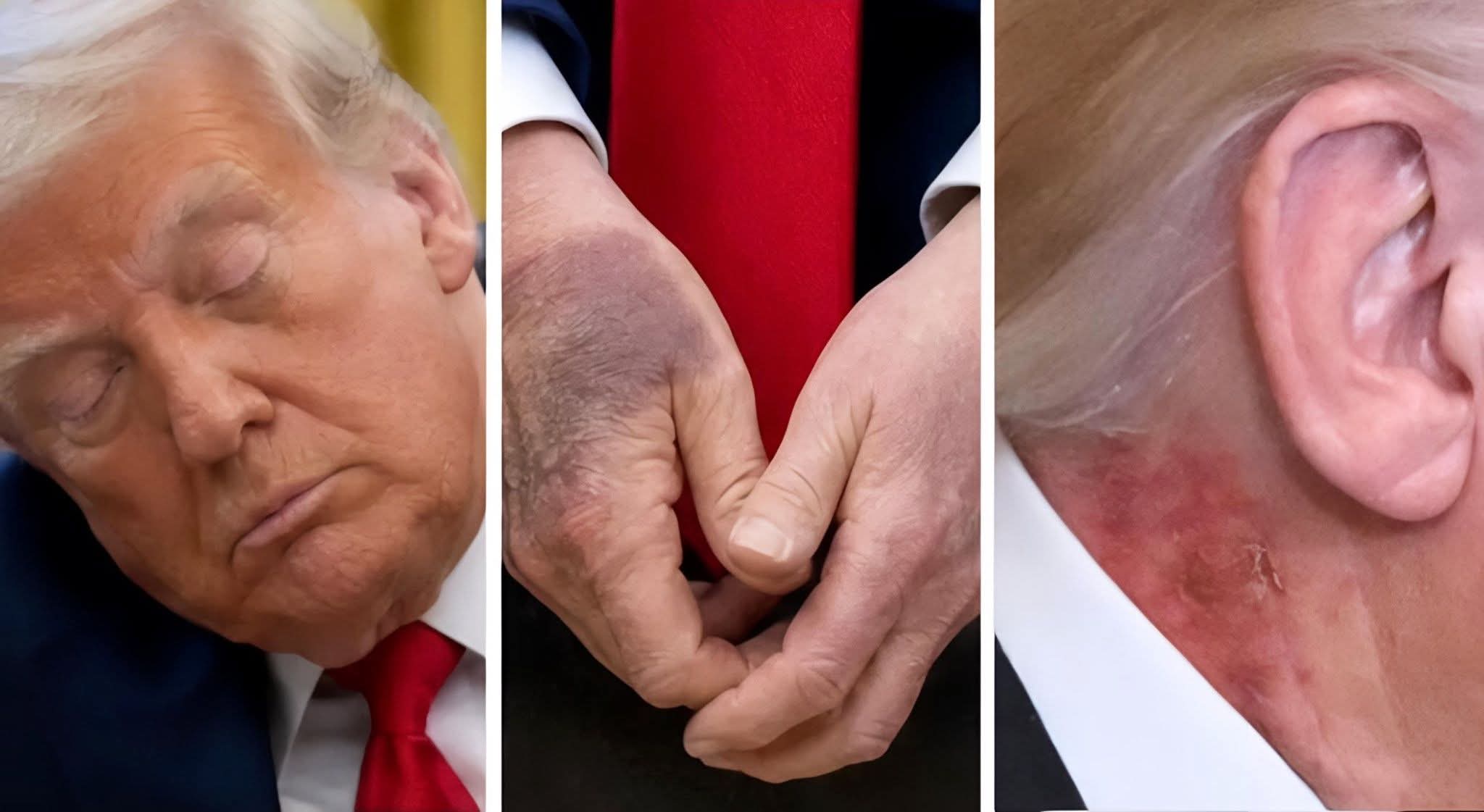
It started with a leak—at least, that’s what people are calling it.
No official statement. No confirmation. Just a whisper that slipped through the cracks of something much bigger… and far more dangerous.
Within hours, the phrase “classified Epstein files” began trending across multiple platforms. But it wasn’t just the files themselves that captured attention. It was what some claimed had been accidentally revealed alongside them—a detail so unexpected, so personal, that it instantly shifted the narrative.
A “secret illness.”
And the name at the center of it all? Donald Trump.
At first, it sounded like another internet rumor—one of many that appear, spread, and disappear just as quickly. But this one didn’t fade. Instead, it grew louder.
The alleged leak reportedly came from a batch of sensitive documents tied to long-discussed investigations surrounding Jeffrey Epstein. While most of the material remains either sealed or heavily redacted, sources online claim that a small portion briefly surfaced before being taken down.
That brief window was all it took.
Screenshots—unverified and impossible to trace—began circulating. Some users claimed the documents referenced private medical details. Others insisted it was misinterpretation, or even deliberate manipulation designed to spark chaos.
And chaos, indeed, followed.
Inside political circles, tension reportedly escalated. Conversations grew sharper. Questions multiplied. Was there any truth to the claims? Or was this a calculated attempt to distract from the contents of the files themselves?
No one seemed to agree.
Observers noted that the timing couldn’t have been more explosive. The Epstein case has long been surrounded by secrecy, powerful connections, and unanswered questions. The mere suggestion that unrelated personal information could be entangled within those documents only deepened the mystery.
But here’s where things become even more complicated.
Despite the frenzy, no credible source has confirmed the existence of any such medical disclosure. No official records. No verified statements. Just fragments—digital echoes of something that may never have existed in the first place.
Still, the story refused to die.
Speculation turned into theories. Theories turned into debates. And debates quickly became something else entirely—a battle over truth, perception, and the power of information in a hyper-connected world.
Some analysts believe the so-called “leak” may have been a misread annotation, taken out of context and amplified beyond recognition. Others suggest the possibility of deliberate fabrication, crafted to exploit public curiosity and deepen existing divisions.
Meanwhile, those closest to the situation have remained noticeably silent.
No direct denial. No confirmation.
Just silence.
And sometimes, silence speaks louder than words.
Behind closed doors, insiders describe an atmosphere of urgency—not necessarily because of the alleged illness itself, but because of the ripple effect such claims can create. In today’s digital landscape, perception can move faster than facts. And once a narrative takes hold, it becomes nearly impossible to contain.
So what really happened?
Was there ever a leak?
Were the documents real?
Or is this entire situation a reflection of something deeper—a world where information, true or false, can ignite global attention in seconds?
For now, one thing remains certain: there is no verified evidence supporting the claim of any “secret illness” being revealed.
But in a story filled with shadows, unanswered questions, and carefully guarded secrets, certainty is the one thing that seems hardest to find.
And until clarity emerges—if it ever does—the speculation will continue to grow, one whisper at a time.










Taylor Swift Spotted Looking Emotional as She Watches Tyquan Thornton Try to Stand Up Before Realizing His Ankle Is Broken After a Big Play Against the Raiders – A Heartbreaking Moment as Brittany Mahomes Comforts Taylor as She Struggles to Hold Back Her Emotions

Taylor Swift Stuns as She Is Spotted at Allegiant Stadium With Brittany Mahomes, Who Shows Off Her New Arm Tattoo to Taylor, as They Support and Cheer for Their Husbands, Travis Kelce and Patrick Mahomes, During the High-Stakes Chiefs vs. Raiders Game

Taylor Swift Breaks NFL Protocol Again and Rushes to Hug Husband Travis Kelce as He Leads the Charge Onto the Field at Allegiant Stadium for Chiefs vs. Raiders Game

Taylor Swift and Husband Travis Kelce Spotted in an Adorable Moment as They Stroll Onto the Field at Allegiant Stadium for Warmups Ahead of Chiefs vs. Raiders Game

Taylor Swift Steals the Spotlight as She Shouts “My Mr. Cleveland” and Runs to Hug Husband Travis Kelce Upon His Arrival at Allegiant Stadium for Chiefs vs. Raiders Game

Taylor Swift Arrives in Las Vegas on Her Private Jet Alongside Her Parents Andrea and Scott Swift and Husband Travis Kelce’s Parents Donna and Ed Kelce to Support Travis at the High Stakes Chiefs vs. Raiders Game

Taylor Swift, Brittany Mahomes and Dakota Johnson Steal the Spotlight as They Pose Together After Taylor Surprises Dakota With a Birthday Cake Following the End of the SNL Broadcast

Travis Kelce Breaks Chiefs and NFL Protocol Again by Ditching the Team Hotel for a Dinner Double Date With Wife Taylor Swift, Showing Off His Brand New Dramatic Haircut, Alongside Patrick Mahomes and Brittany Mahomes to Celebrate Their 3 Month Wedding Anniversary Ahead of the Chiefs vs. Raiders Game

Taylor Swift Breaks Las Vegas Airport Protocol and Steals the Spotlight as She Bursts Into the Airport to Welcome and Hug Husband Travis Kelce Upon His Arrival With His Chiefs Teammates Ahead of the Chiefs vs. Raiders Game on Their Three Month Wedding Anniversary, Leaving Fans Replaying the Moment She Slipped Past Patrick Mahomes, Who Couldn’t Catch Her or Slow Her Down

Travis Kelce Breaks NFL Protocol Again and Ditches the Chiefs’ Team Plane to Las Vegas Ahead of the High-Stakes Chiefs vs. Raiders Game, Spotted Celebrating His Three-Month Wedding Anniversary With Wife Taylor Swift at Joe’s Kansas City Bar-B-Que on a Shocking Anniversary Date, Looking Unbothered and Deeply in Love

Taylor Swift Steals the Spotlight in Emotional Kansas City Airport Moment With Husband Travis Kelce and His Fresh New Haircut as She Hugs Him and Refuses to Let Him Board the Chiefs’ Plane to Las Vegas for the Chiefs vs. Raiders Game on Their 3-Month Wedding Anniversary
