
NEWS
America now controls Greenland’s security. It does not own the island.

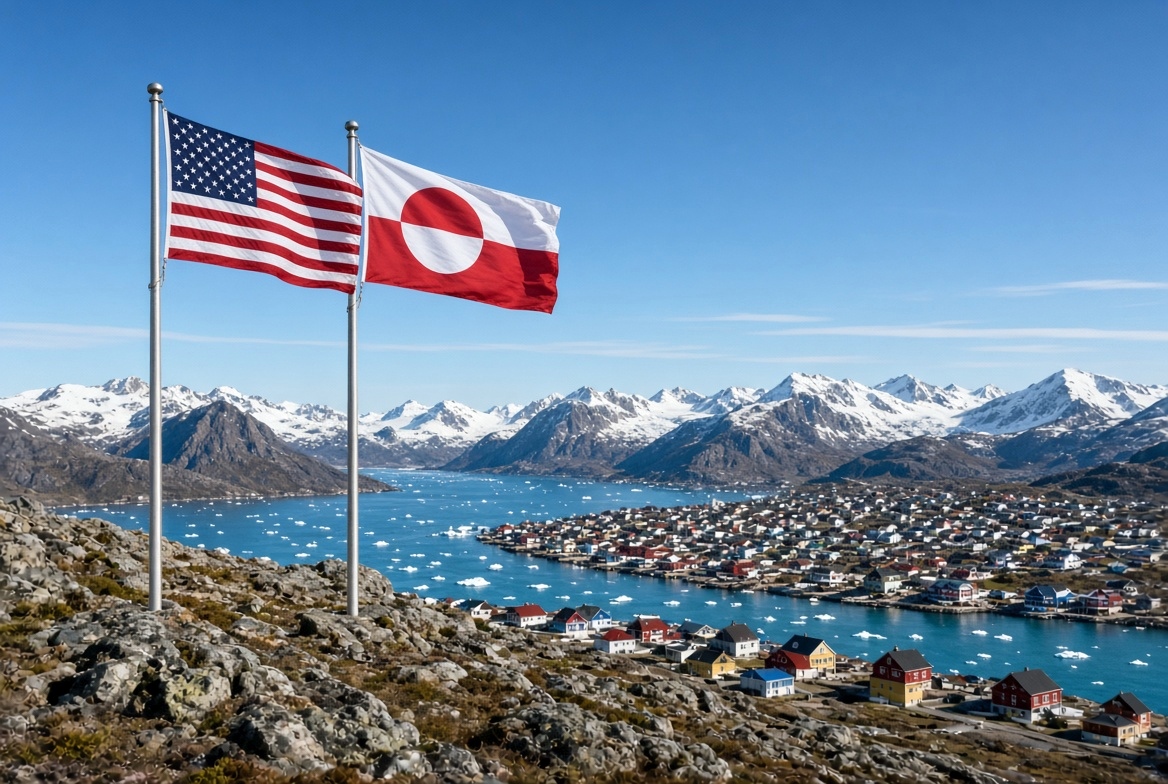
The argument over Greenland has been loud enough to drown the facts. President Trump said America now holds permanent control over the island’s security. Denmark and Greenland answered that the land itself was never sold.
That split is the whole story. One capital described a breakthrough that ends unfinished American ambition. The other two described a defense pact that leaves the Kingdom intact and Greenlanders free to choose.
Greenland is not an empty map. It is a self governing territory of about fifty seven thousand people, most of them Inuit, with a parliament and a long memory of being discussed by distant powers.
Denmark still handles foreign affairs and defense, which is why Washington talked with Copenhagen as well as Nuuk. That structure lets a deal sound like ownership in one speech and partnership in another.
The United States did not arrive in the Arctic yesterday. American forces built wartime stations to keep the North Atlantic from German hands, and a nineteen fifty one agreement later made that presence last.
Pituffik Space Base already watches the northern sky for missiles and satellites. The new announcement promises a larger footprint and a standing American right to act for the security of both countries.
Trump said no adversary may plant a base, keep troops, or make sensitive investments without written American approval. Supporters hear a lock on rivals. Critics hear a veto that reaches into local economics.
Danish leaders struck another careful tone. They said the coming agreement strengthens Arctic security, serves the alliance, and still recognizes the sovereignty of the Kingdom along with Greenlandic self determination.
Greenland’s government called the text encouraging and said it protects the island’s place in Western cooperation. That welcome matters because no pact lasts if the people on the ice treat it as annexation.
The document has not been published. Until parliaments finish their work and the three governments sign in New York, the public is arguing over summaries rather than clauses that can be read aloud.
That vacuum is why so many Americans asked whether the flag had changed. Permanent control sounds like title to land. In treaty speech it more often means basing rights and a say over who else operates nearby.
Ownership would mean citizenship, mineral title, courts, and the power to rename a place. None of those transfers have been announced. What was announced is security authority framed as lasting and broad.
There is a sharper edge. If the pact outlives a future independence vote, Washington keeps a legal hook after Nuuk leaves Copenhagen. Allies call that stability. Others call it a mortgage on freedom.
Minerals sit under the ice and under the argument. Rare earths, opening sea lanes, and the missile corridor over the pole make a remote island look central to governments that rarely thought about fishing towns.
Fishing still pays most export bills, and Danish support still steadies the budget. A larger American presence can bring work and concrete. It can also bring the feeling that outsiders are pricing the future first.
History sits close to the surface. Greenlanders remember Danish rule that was not always gentle, including later reckonings over forced contraception. Talk of maps and magnets will meet that memory in Nuuk.
Europe watched months of annexation talk with alarm because a quarrel inside the alliance is not ordinary real estate. A deal that keeps Danish sovereignty on paper is meant to lower that fever.
Skeptics say America could have expanded under the old treaty without a victory lap. Believers say years of warnings about rival interest produced little movement until a harder claim forced a table.
Both readings can be partly true. Alliances often modernize old paper when politics make the old paper feel thin. The test is whether the unpublished text matches the calm version or the maximal one.
Readers should hold two sentences at once. America is positioned to shape who defends Greenland and who invests in its most sensitive projects. The island has not been folded into the fifty states.
That is a colder headline than a renamed country or a planted flag. It is also the version that survives contact with law. Control of security is not the same act as taking a country.
What comes next is ordinary and decisive. Signatures, parliamentary votes, then the slow work of concrete, troops, and investment rules. The ice will not care which speech won. The clause that lasts will.

Taylor Swift Spotted Looking Emotional as She Watches Tyquan Thornton Try to Stand Up Before Realizing His Ankle Is Broken After a Big Play Against the Raiders – A Heartbreaking Moment as Brittany Mahomes Comforts Taylor as She Struggles to Hold Back Her Emotions

Taylor Swift Stuns as She Is Spotted at Allegiant Stadium With Brittany Mahomes, Who Shows Off Her New Arm Tattoo to Taylor, as They Support and Cheer for Their Husbands, Travis Kelce and Patrick Mahomes, During the High-Stakes Chiefs vs. Raiders Game

Taylor Swift Breaks NFL Protocol Again and Rushes to Hug Husband Travis Kelce as He Leads the Charge Onto the Field at Allegiant Stadium for Chiefs vs. Raiders Game

Taylor Swift and Husband Travis Kelce Spotted in an Adorable Moment as They Stroll Onto the Field at Allegiant Stadium for Warmups Ahead of Chiefs vs. Raiders Game

Taylor Swift Steals the Spotlight as She Shouts “My Mr. Cleveland” and Runs to Hug Husband Travis Kelce Upon His Arrival at Allegiant Stadium for Chiefs vs. Raiders Game

Taylor Swift Arrives in Las Vegas on Her Private Jet Alongside Her Parents Andrea and Scott Swift and Husband Travis Kelce’s Parents Donna and Ed Kelce to Support Travis at the High Stakes Chiefs vs. Raiders Game

Taylor Swift, Brittany Mahomes and Dakota Johnson Steal the Spotlight as They Pose Together After Taylor Surprises Dakota With a Birthday Cake Following the End of the SNL Broadcast

Travis Kelce Breaks Chiefs and NFL Protocol Again by Ditching the Team Hotel for a Dinner Double Date With Wife Taylor Swift, Showing Off His Brand New Dramatic Haircut, Alongside Patrick Mahomes and Brittany Mahomes to Celebrate Their 3 Month Wedding Anniversary Ahead of the Chiefs vs. Raiders Game

Taylor Swift Breaks Las Vegas Airport Protocol and Steals the Spotlight as She Bursts Into the Airport to Welcome and Hug Husband Travis Kelce Upon His Arrival With His Chiefs Teammates Ahead of the Chiefs vs. Raiders Game on Their Three Month Wedding Anniversary, Leaving Fans Replaying the Moment She Slipped Past Patrick Mahomes, Who Couldn’t Catch Her or Slow Her Down

Travis Kelce Breaks NFL Protocol Again and Ditches the Chiefs’ Team Plane to Las Vegas Ahead of the High-Stakes Chiefs vs. Raiders Game, Spotted Celebrating His Three-Month Wedding Anniversary With Wife Taylor Swift at Joe’s Kansas City Bar-B-Que on a Shocking Anniversary Date, Looking Unbothered and Deeply in Love

Taylor Swift Steals the Spotlight in Emotional Kansas City Airport Moment With Husband Travis Kelce and His Fresh New Haircut as She Hugs Him and Refuses to Let Him Board the Chiefs’ Plane to Las Vegas for the Chiefs vs. Raiders Game on Their 3-Month Wedding Anniversary
