
NEWS
HORROR AT THE BEACH: Blue Angels F-18 Hornet CRASHES in Low-Altitude Tragedy Just Hours After Pete Hegseth’s Defiant “Flyovers Until Morale Improves” Post Sparks Fury

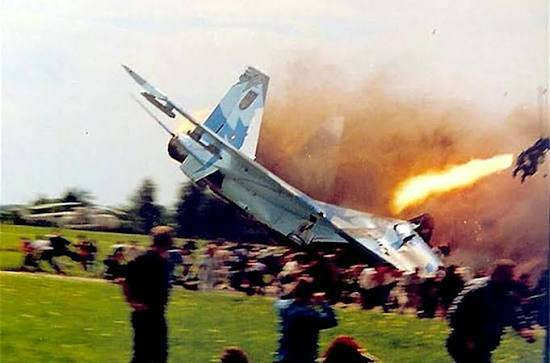
The day had started like any other coastal afternoon—warm sun, scattered laughter, and the rhythmic crash of waves against the shore. Families dotted the sand, children chased kites, and the distant hum of aircraft added a familiar thrill to the atmosphere. It was supposed to be a routine flyover—another breathtaking display of precision by the famed Blue Angels.
But within seconds, that excitement turned into something far darker.
Witnesses say the jet appeared suddenly, cutting across the sky at a dangerously low altitude. At first, the crowd cheered. Phones lifted. Cameras rolled. The roar of the F-18 Hornet echoed like thunder, drawing every eye upward. Then something felt… off.
The aircraft dipped.
Too low.
Too fast.
A sharp, uneasy silence swept across the beach as the jet veered at an angle that didn’t match the usual choreography. What followed was a moment many would later describe as “unreal”—a blur of motion, a deafening sound, and a sudden burst that sent shockwaves through the shoreline.
People screamed. Some ran. Others stood frozen, unable to process what they had just seen.
“I thought it was part of the show,” one witness said, still shaking. “Until it wasn’t.”
Within minutes, emergency sirens pierced the air. Authorities rushed to secure the area as speculation spread like wildfire online. Clips of the incident began circulating, each one more alarming than the last. The timing only fueled the chaos—just hours earlier, a controversial post by Pete Hegseth had sparked heated debate, with critics questioning the tone and timing of his remarks about military flyovers.
Now, with reports of a crash emerging, many began drawing connections—some factual, others purely speculative. Social media erupted. Was this a tragic coincidence? A preventable error? Or something else entirely?
As the dust settled, details remained scarce.
Officials urged the public to remain calm, but tension lingered. Rescue teams worked swiftly, combing through the area and assessing the situation. The beach, once alive with laughter, had fallen into a heavy, uneasy quiet.
Then came the update everyone had been waiting for.
And it changed everything.
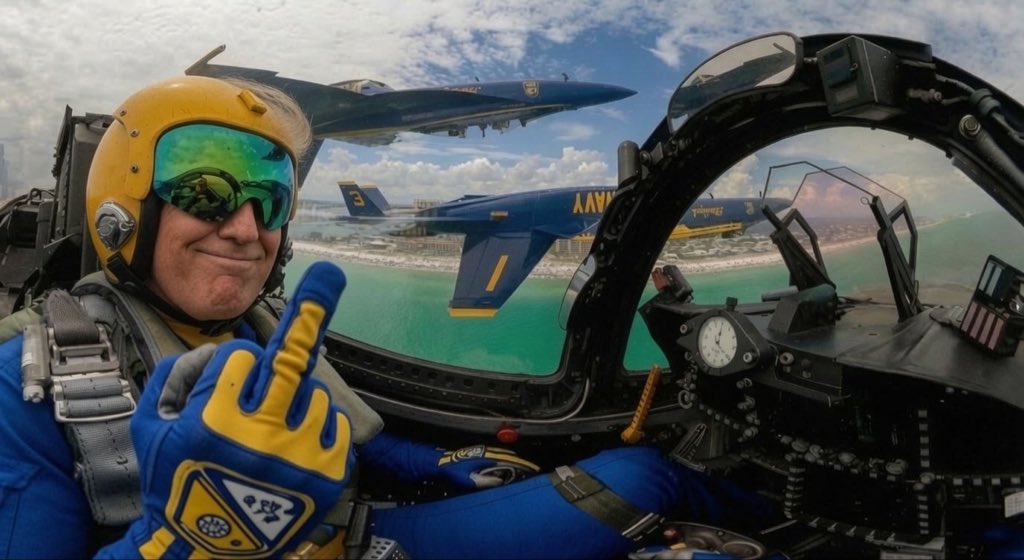
Contrary to the initial panic, authorities confirmed that there had been no catastrophic crash into the crowd or beachfront. The aircraft had experienced a critical low-altitude maneuver issue during a training pass nearby—but the pilot successfully regained partial control before ejecting safely away from populated areas.
Emergency crews located the pilot shortly after. He was conscious.
Alive.
And, incredibly, expected to recover.
Even more reassuring, no civilians on the beach were injured. What many had feared would become a devastating tragedy turned out to be a narrowly avoided disaster.
Officials later clarified that while the incident was serious and under investigation, early reports had exaggerated key details due to the chaos and viral spread of incomplete footage. The dramatic visuals, combined with the timing of online controversy, had created a perfect storm of misinformation and fear.
The beach was reopened later that day.
Families returned—hesitant at first, then gradually at ease. The waves kept rolling, just as they always had. The sky, once a source of terror hours before, softened again into a calm blue stretch above.
For many who were there, the memory will linger—a reminder of how quickly normal can turn into panic, and how powerful perception can be in moments of uncertainty.
But in the end, what could have been a headline of heartbreak became something else entirely:
A close call.
A breath held—and then finally released.
And most importantly…
Everyone is okay.

Taylor Swift Spotted Looking Emotional as She Watches Tyquan Thornton Try to Stand Up Before Realizing His Ankle Is Broken After a Big Play Against the Raiders – A Heartbreaking Moment as Brittany Mahomes Comforts Taylor as She Struggles to Hold Back Her Emotions

Taylor Swift Stuns as She Is Spotted at Allegiant Stadium With Brittany Mahomes, Who Shows Off Her New Arm Tattoo to Taylor, as They Support and Cheer for Their Husbands, Travis Kelce and Patrick Mahomes, During the High-Stakes Chiefs vs. Raiders Game

Taylor Swift Breaks NFL Protocol Again and Rushes to Hug Husband Travis Kelce as He Leads the Charge Onto the Field at Allegiant Stadium for Chiefs vs. Raiders Game

Taylor Swift and Husband Travis Kelce Spotted in an Adorable Moment as They Stroll Onto the Field at Allegiant Stadium for Warmups Ahead of Chiefs vs. Raiders Game

Taylor Swift Steals the Spotlight as She Shouts “My Mr. Cleveland” and Runs to Hug Husband Travis Kelce Upon His Arrival at Allegiant Stadium for Chiefs vs. Raiders Game

Taylor Swift Arrives in Las Vegas on Her Private Jet Alongside Her Parents Andrea and Scott Swift and Husband Travis Kelce’s Parents Donna and Ed Kelce to Support Travis at the High Stakes Chiefs vs. Raiders Game

Taylor Swift, Brittany Mahomes and Dakota Johnson Steal the Spotlight as They Pose Together After Taylor Surprises Dakota With a Birthday Cake Following the End of the SNL Broadcast

Travis Kelce Breaks Chiefs and NFL Protocol Again by Ditching the Team Hotel for a Dinner Double Date With Wife Taylor Swift, Showing Off His Brand New Dramatic Haircut, Alongside Patrick Mahomes and Brittany Mahomes to Celebrate Their 3 Month Wedding Anniversary Ahead of the Chiefs vs. Raiders Game

Taylor Swift Breaks Las Vegas Airport Protocol and Steals the Spotlight as She Bursts Into the Airport to Welcome and Hug Husband Travis Kelce Upon His Arrival With His Chiefs Teammates Ahead of the Chiefs vs. Raiders Game on Their Three Month Wedding Anniversary, Leaving Fans Replaying the Moment She Slipped Past Patrick Mahomes, Who Couldn’t Catch Her or Slow Her Down

Travis Kelce Breaks NFL Protocol Again and Ditches the Chiefs’ Team Plane to Las Vegas Ahead of the High-Stakes Chiefs vs. Raiders Game, Spotted Celebrating His Three-Month Wedding Anniversary With Wife Taylor Swift at Joe’s Kansas City Bar-B-Que on a Shocking Anniversary Date, Looking Unbothered and Deeply in Love

Taylor Swift Steals the Spotlight in Emotional Kansas City Airport Moment With Husband Travis Kelce and His Fresh New Haircut as She Hugs Him and Refuses to Let Him Board the Chiefs’ Plane to Las Vegas for the Chiefs vs. Raiders Game on Their 3-Month Wedding Anniversary
