
CELEBRITY
Vogue Has Finally Dropped the First Look at Taylor Swift and Travis Kelce’s Majestic MSG Wedding Photos for the 2026 Cover, Breaking the Internet After Intense Online Pressure Forced the Singer to Share the Never-Before-Seen Pictures

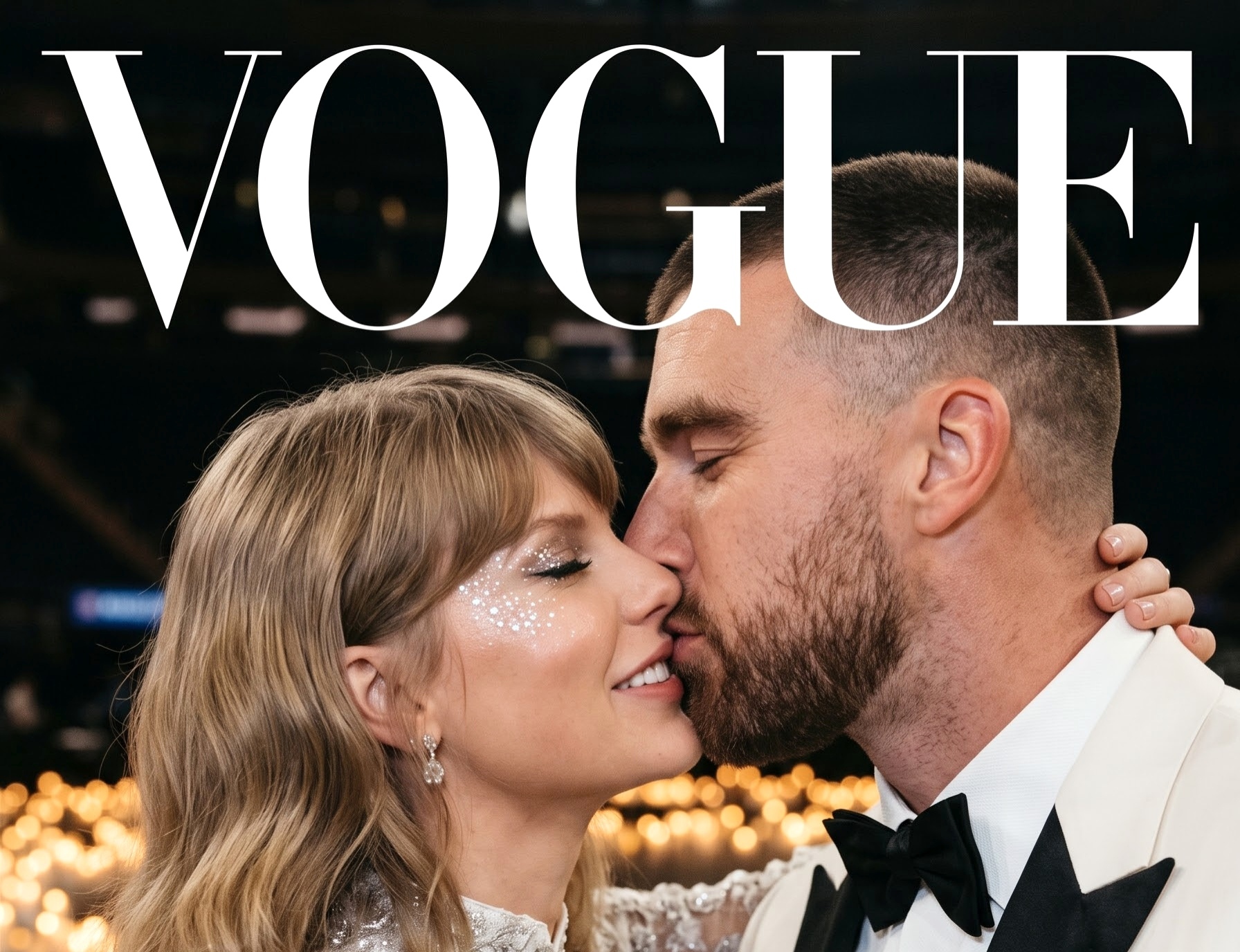
The internet has been given another reason to lose its collective composure, as a stunning first-look concept surrounding Taylor Swift and Travis Kelce’s supposed majestic Madison Square Garden wedding has captured the imagination of fans everywhere.
For months, fans have imagined what an extravagant Taylor and Travis wedding could look like, combining the singer’s glamorous world with the football star’s larger-than-life personality. Now, this fictional Vogue cover moment takes that fantasy to another level entirely.
The imagined photographs place the couple at the center of an unforgettable celebration, surrounded by the kind of elegance, emotion and spectacle that would instantly become one of the most discussed celebrity wedding moments of the year.
Taylor, known for turning major chapters of her life into unforgettable cultural moments, becomes the natural centerpiece of the imagined shoot. Her presence gives the fictional photographs a dreamy quality, while Travis brings his unmistakable confidence and playful energy.
Madison Square Garden provides the perfect imaginary setting for such a dramatic celebration. The legendary New York venue has hosted countless unforgettable performances and events, making it an appropriately grand backdrop for a fictional wedding worthy of enormous attention.
The imagined Vogue cover arrives after intense online anticipation, with fans supposedly demanding a glimpse behind the curtain. In this creative scenario, the pressure builds until Taylor finally decides to share photographs that had remained completely unseen.
That imagined decision immediately changes everything. Instead of another carefully controlled public appearance, fans are suddenly presented with intimate wedding imagery that appears to reveal a softer and more emotional side of the couple.
One fictional photograph shows Taylor and Travis standing together beneath dramatic lighting, creating the impression of two people completely absorbed in the moment. The imagined image feels less like a traditional celebrity portrait and more like a private memory transformed into art.
Another imagined frame captures Travis looking toward Taylor with an expression that seems to communicate everything without requiring a single word. Taylor, meanwhile, appears radiant, creating a visual contrast that makes the fictional photograph especially memorable.
The beauty of the imagined Vogue spread is not simply the clothes, venue or celebrity status surrounding the couple. It is the emotional storytelling behind every picture, allowing viewers to imagine what a deeply personal celebration might have felt like.
Fans would undoubtedly examine every imagined detail, from Taylor’s expression to Travis’s body language, searching for tiny moments that could reveal something about their relationship. That fascination is precisely what makes celebrity wedding photography so powerful in popular culture.
In this fictional scenario, social media quickly becomes overwhelmed as screenshots and reactions spread across platforms. One imagined photograph appears on countless timelines, while another becomes the subject of endless conversations about the couple’s chemistry.
The fictional Vogue reveal also plays into the fascination surrounding Taylor’s ability to transform ordinary moments into cultural events. Whether through music, fashion or carefully presented imagery, she has become closely associated with moments that command extraordinary public attention.
Travis, on the other hand, adds a completely different energy to the imagined photographs. His athletic background and charismatic personality create an entertaining contrast with Taylor’s polished pop-star image, giving the fictional editorial a distinctive balance.
Together, they create an imagined visual story that feels simultaneously glamorous and personal. Rather than presenting only an extravagant celebration, the fictional photographs suggest a couple enjoying a major milestone while surrounded by the enormous attention that follows them everywhere.
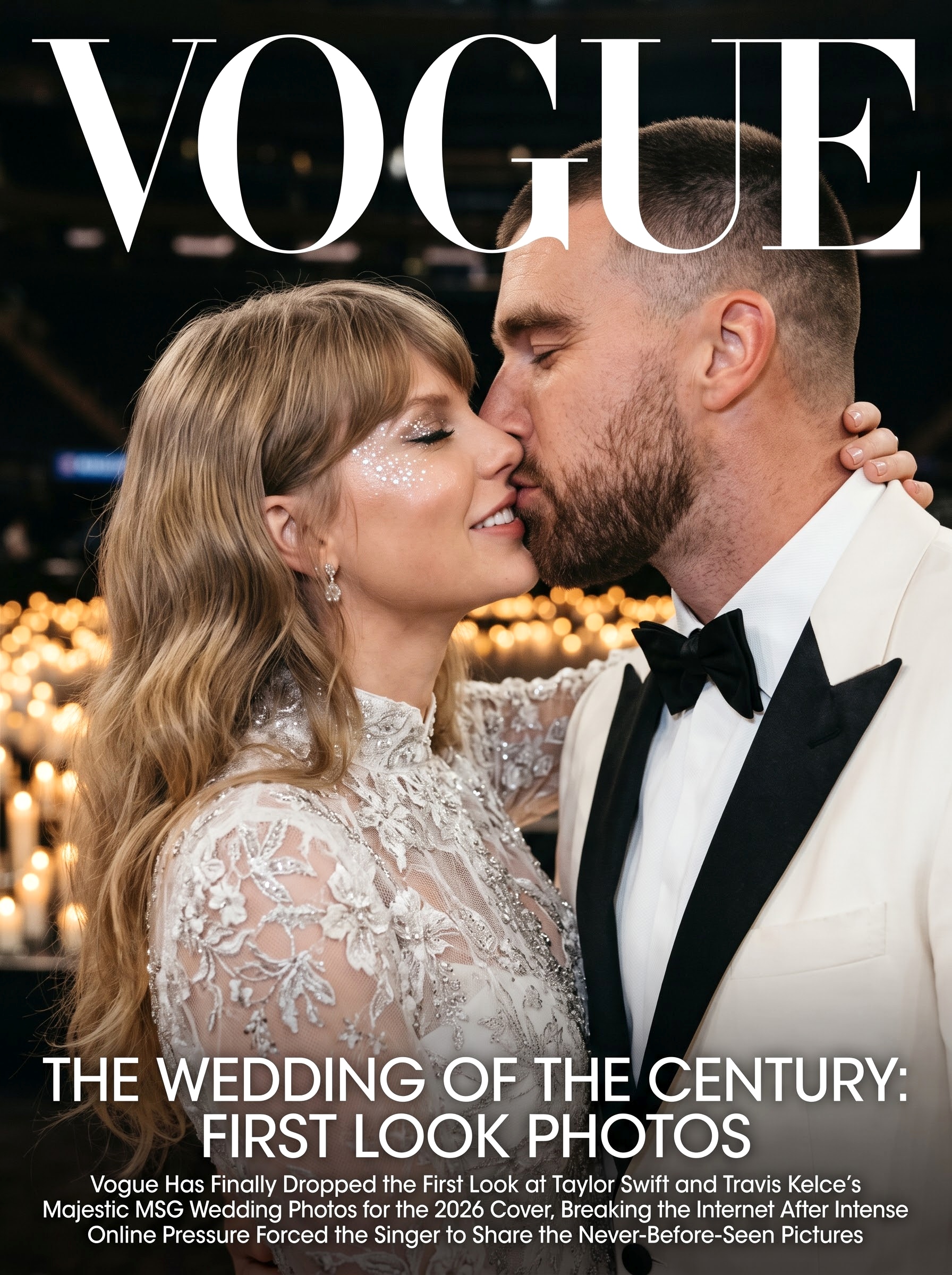
The supposed decision to release never-before-seen wedding pictures becomes even more dramatic because of the fictional online pressure surrounding it. Fans have spent so much time imagining the event that even a single photograph would feel like an enormous revelation.
That imagined anticipation explains why the fictional Vogue cover becomes such a powerful internet moment. People are not merely looking at photographs; they are comparing the images with years of imagined expectations about what Taylor and Travis might look like together.
The fictional spread also gives the couple an opportunity to appear away from the stadiums, concerts and red carpets where audiences normally see them. Here, the imagined focus remains entirely on their connection and the atmosphere surrounding their special day.
Taylor’s fictional appearance carries an unmistakable sense of elegance, while Travis appears equally comfortable within the glamorous setting. The imagined pairing creates a visual story that feels deliberately timeless, as though the photographs were created to be remembered long after the celebration ended.
Perhaps the most compelling element of the fictional reveal is the suggestion that these photographs were never intended for public consumption. That idea makes every imagined frame feel more valuable, because viewers are being invited into a moment that was supposedly kept private.
The fictional Vogue presentation therefore transforms a wedding album into a cultural event. Instead of quietly documenting a celebration, the imagined publication turns the photographs into something that dominates conversations, inspires reactions and becomes part of the internet’s collective imagination.
For Taylor’s fictional fans, the imagined photographs would represent more than fashion or celebrity glamour. They would symbolize a rare glimpse into a personal chapter, presented through the polished visual language of one of the world’s most recognizable fashion publications.
For Travis’s fictional supporters, the images would offer an entirely different but equally fascinating perspective. Seeing the football star placed inside such an elaborate fashion environment would create a striking contrast with the competitive intensity associated with his professional career.
And for everyone watching from outside their fictional fan communities, the imagined Vogue cover would simply be spectacular entertainment. The combination of romance, celebrity, fashion, New York grandeur and mystery creates an irresistible recipe for online fascination.
The imagined internet reaction would likely become even more intense as fans dissected individual photographs. Every smile, glance, pose and tiny detail would invite interpretation, with people attempting to determine which moments appeared spontaneous and which were carefully arranged for the camera.
Yet beneath all the imagined excitement lies something simpler. The photographs represent the timeless fascination people have with love stories, especially when those stories involve two individuals whose careers already place them under extraordinary public attention.
That is what makes this fictional Vogue concept so compelling. It does not rely entirely on spectacle. At its heart, the imagined editorial is about two famous people stepping into a new chapter together and allowing the world to witness a carefully framed version of their happiness.
Whether imagined beneath the lights of Madison Square Garden or presented through the pages of a glamorous fashion magazine, the fictional celebration feels designed for maximum emotional impact. Every detail contributes to the sense that viewers are witnessing something extraordinary.
The supposed online pressure adds another layer to the story, turning the fictional release into an act of anticipation finally rewarded. After months of speculation and imagined curiosity, fans suddenly receive the visual moment they have been waiting for.
In the fictional world created by this headline, Vogue’s first look would therefore become much more than a magazine cover. It would become a digital phenomenon, sending fans into an emotional frenzy while giving everyone something beautiful to admire.
Ultimately, the imagined Taylor Swift and Travis Kelce wedding photographs represent the perfect collision of romance, celebrity culture, fashion and spectacle. They offer a glamorous fantasy of what their most important celebration could look like through Vogue’s unmistakably dramatic lens.
And perhaps that is why the fictional images feel so captivating. They invite viewers to pause, imagine the music, picture the atmosphere and become part of a celebration that feels simultaneously enormous and deeply intimate.
For a couple surrounded by constant attention, the imagined photographs provide something surprisingly simple: a frozen moment of togetherness. Whether viewed as celebrity fantasy or creative storytelling, that emotional quality is what gives the fictional Vogue cover its lasting appeal.
The internet may move quickly from one viral moment to another, but a beautifully imagined wedding portrait has the power to remain unforgettable. In this fictional scenario, Taylor and Travis would have achieved exactly that – creating a visual love story designed to live far beyond one magazine cover.





Taylor Swift Spotted Looking Emotional as She Watches Tyquan Thornton Try to Stand Up Before Realizing His Ankle Is Broken After a Big Play Against the Raiders – A Heartbreaking Moment as Brittany Mahomes Comforts Taylor as She Struggles to Hold Back Her Emotions

Taylor Swift Stuns as She Is Spotted at Allegiant Stadium With Brittany Mahomes, Who Shows Off Her New Arm Tattoo to Taylor, as They Support and Cheer for Their Husbands, Travis Kelce and Patrick Mahomes, During the High-Stakes Chiefs vs. Raiders Game

Taylor Swift Breaks NFL Protocol Again and Rushes to Hug Husband Travis Kelce as He Leads the Charge Onto the Field at Allegiant Stadium for Chiefs vs. Raiders Game

Taylor Swift and Husband Travis Kelce Spotted in an Adorable Moment as They Stroll Onto the Field at Allegiant Stadium for Warmups Ahead of Chiefs vs. Raiders Game

Taylor Swift Steals the Spotlight as She Shouts “My Mr. Cleveland” and Runs to Hug Husband Travis Kelce Upon His Arrival at Allegiant Stadium for Chiefs vs. Raiders Game

Taylor Swift Arrives in Las Vegas on Her Private Jet Alongside Her Parents Andrea and Scott Swift and Husband Travis Kelce’s Parents Donna and Ed Kelce to Support Travis at the High Stakes Chiefs vs. Raiders Game

Taylor Swift, Brittany Mahomes and Dakota Johnson Steal the Spotlight as They Pose Together After Taylor Surprises Dakota With a Birthday Cake Following the End of the SNL Broadcast

Travis Kelce Breaks Chiefs and NFL Protocol Again by Ditching the Team Hotel for a Dinner Double Date With Wife Taylor Swift, Showing Off His Brand New Dramatic Haircut, Alongside Patrick Mahomes and Brittany Mahomes to Celebrate Their 3 Month Wedding Anniversary Ahead of the Chiefs vs. Raiders Game

Taylor Swift Breaks Las Vegas Airport Protocol and Steals the Spotlight as She Bursts Into the Airport to Welcome and Hug Husband Travis Kelce Upon His Arrival With His Chiefs Teammates Ahead of the Chiefs vs. Raiders Game on Their Three Month Wedding Anniversary, Leaving Fans Replaying the Moment She Slipped Past Patrick Mahomes, Who Couldn’t Catch Her or Slow Her Down

Travis Kelce Breaks NFL Protocol Again and Ditches the Chiefs’ Team Plane to Las Vegas Ahead of the High-Stakes Chiefs vs. Raiders Game, Spotted Celebrating His Three-Month Wedding Anniversary With Wife Taylor Swift at Joe’s Kansas City Bar-B-Que on a Shocking Anniversary Date, Looking Unbothered and Deeply in Love

Taylor Swift Steals the Spotlight in Emotional Kansas City Airport Moment With Husband Travis Kelce and His Fresh New Haircut as She Hugs Him and Refuses to Let Him Board the Chiefs’ Plane to Las Vegas for the Chiefs vs. Raiders Game on Their 3-Month Wedding Anniversary
